


Does powder sintering require the use of a vacuum furnace
Mar. 01, 2026
Powder sintering often employs vacuum furnaces, especially when processing materials that are prone to oxidation, highly reactive, or require stringent purity standards. Vacuum furnaces are crucial equipment in such cases. Here is a detailed analysis:
I. Core Advantages of Vacuum Sintering
1. Prevention of Oxidation and Contamination
The vacuum environment removes air, moisture, and impurity gases, preventing oxidation, carbonization, or contamination of the powder during high-temperature sintering.
2. Enhanced Material Performance
Density: The vacuum environment promotes full particle bonding, reducing porosity and achieving higher product density (e.g., significantly improved density in ceramic materials).
Purity: Harmful gases are excluded, lowering impurity content, making it suitable for high-end ceramics in semiconductor and aerospace applications (e.g., silicon carbide, aluminum nitride).
Structural Uniformity: Vacuum sintering reduces internal defects, improving thermal stability and mechanical strength.
3. Adaptability to Special Material Requirements
Materials with Volatile Components: The vacuum environment minimizes component loss, making it ideal for ceramic materials containing metallic elements or volatile components.
Reductive Atmosphere Needs: Some materials require sintering under reductive conditions; vacuum furnaces allow flexible control by introducing gases like hydrogen.
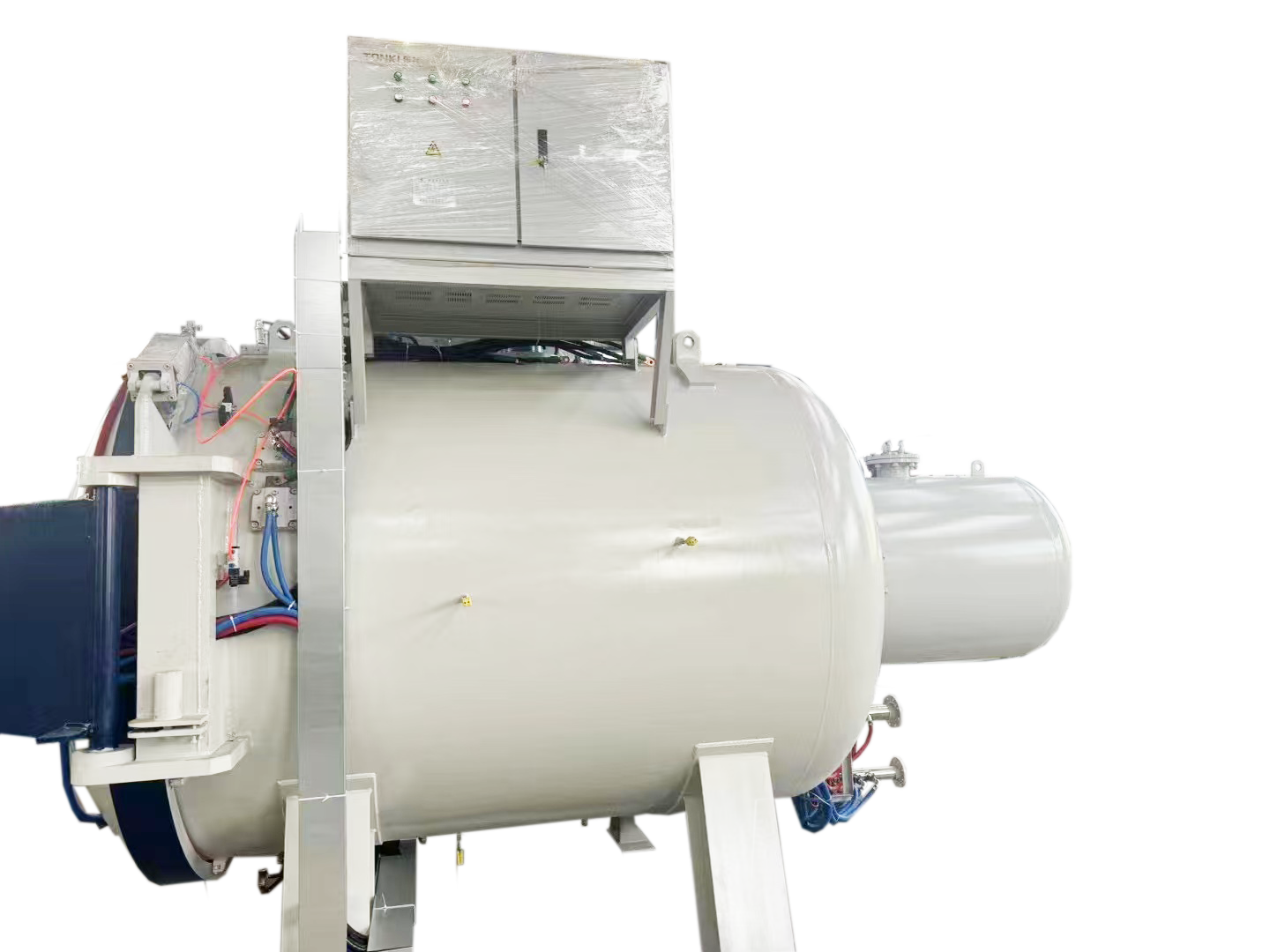
II. Typical Applications of Vacuum Sintering Furnaces
1. High-End Ceramic Production
Semiconductor Industry: High-purity, high-density materials such as silicon carbide and aluminum nitride ceramics.
Aerospace: High-performance ceramic components (e.g., ceramic bearings, sensor housings) with strict dimensional accuracy and surface quality requirements.
2. Metal Material Processing
Refractory Alloys: Powder forming and sintering of tungsten, molybdenum, and their alloys to avoid high-temperature oxidation.
Precision Parts: Components like gears and sprockets benefit from vacuum sintering for improved wear resistance and dimensional stability.
3. Composite Material Fabrication
Carbon fiber-reinforced composites and ceramic matrix composites require precise control of atmosphere and temperature under vacuum to achieve superior properties.
III. Technical Features of Vacuum Sintering Furnaces
1. Equipment Structure
Core Components: Furnace body, vacuum system, heating system (e.g., graphite heating elements), cooling system, and control system.
Temperature Control: Multi-zone temperature control design, combined with intelligent algorithms, ensures uniformity (e.g., within ±2°C).
Atmosphere Regulation: Supports switching between vacuum, inert gases, or reductive gases to meet diverse material requirements.
2. Process Flexibility
Vacuum Hot Pressing Sintering: Unidirectional pressure is applied in a vacuum environment to further densify difficult-to-sinter materials.
Rapid Cooling: Some vacuum furnaces are equipped with rapid cooling systems to prevent oxidation and enhance production efficiency.
IV. Comparison with Other Sintering Techniques
Technology Type | Advantages | Limitations |
Vacuum Sintering | Prevents oxidation, improves purity, adapts to special materials | High equipment cost, complex operation, high maintenance requirements |
Pressureless Sintering | Simple operation, low cost, suitable for large-scale production | Prone to oxidation, lower density, unsuitable for highly reactive materials |
Atmosphere-Protected Sintering | Uses inert gases (e.g., nitrogen, argon) for protection, lower cost than vacuum sintering | High gas purity requirements, uneven gas flow may cause local impurity retention |


