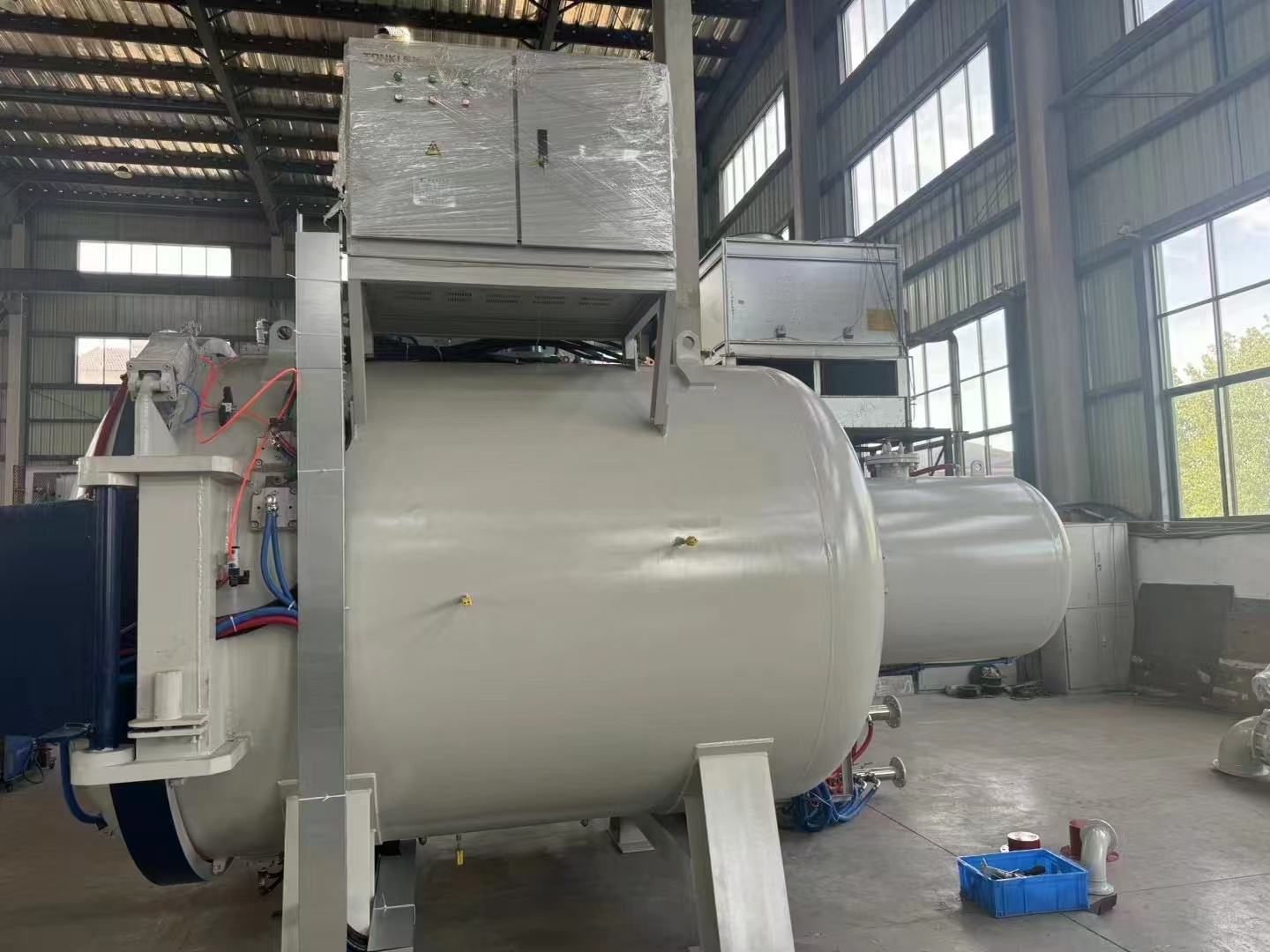


How should one choose the quenching medium for a vacuum quenching furnace
Mar. 06, 2026
When selecting a quenching medium for a vacuum quenching furnace, it is necessary to comprehensively consider factors such as the workpiece material, shape, performance requirements, and process characteristics among media like gas quenching, oil quenching, and water quenching. Here is a detailed analysis:
Selection Based on Workpiece Material
High-speed steel, die steel, stainless steel, and alloy steel: These materials typically require a high cooling rate to obtain martensitic structures, thereby enhancing hardness and wear resistance. Therefore, a vacuum oil quenching furnace can be chosen, utilizing specialized quenching oil as the cooling medium. Its relatively fast cooling rate can better improve the hardness and strength of metallic materials.
Special materials such as titanium alloys and beryllium bronze: These materials have extremely high cooling rate requirements and need to avoid oxidation and contamination. Hence, a vacuum water quenching furnace can be selected, using water as the cooling medium. However, attention must be paid to the sealing performance to prevent water vapor from entering the vacuum furnace and affecting the treatment results.
Precision dies, stainless steel parts, etc.: These workpieces have high surface finish requirements and are susceptible to contamination. Therefore, a vacuum gas quenching furnace can be chosen, using inert gases (such as nitrogen, argon, etc.) as the cooling medium. After heating in a vacuum state, high-pressure inert gases are introduced into the furnace for rapid cooling. This method does not require the use of oil-based cooling media, resulting in a clean and tidy surface of the workpiece after cooling, eliminating the need for additional cleaning.
Selection Based on Workpiece Shape and Size
Workpieces with complex shapes and large cross-sectional variations: Media with good cooling uniformity, such as inert gases, should be prioritized to reduce the risk of deformation. A vacuum gas quenching furnace achieves uniform cooling from the surface to the inner layers through high-pressure gas turbulence, making it suitable for processing such workpieces.
Simple-shaped workpieces: Media with stronger cooling capabilities, such as specialized quenching oils, can be chosen to improve production efficiency. The relatively fast cooling rate of a vacuum oil quenching furnace can better meet the heat treatment requirements of simple-shaped workpieces.
Selection Based on Workpiece Performance Requirements
High hardness and wear resistance requirements: Media with strong cooling capabilities, such as specialized quenching oils or water (for special materials), should be selected. These media can provide sufficient cooling rates in the high-temperature zone to ensure that the workpiece obtains a martensitic structure.
Low deformation and high dimensional accuracy requirements: Media with good cooling uniformity, such as inert gases, should be chosen. A vacuum gas quenching furnace can achieve uniform cooling of the workpiece by precisely controlling gas pressure and flow rate, reducing the risk of deformation.
Selection Based on the Type of Vacuum Quenching Furnace
Single-chamber vacuum quenching furnaces: Suitable for batch processing of small workpieces and commonly used in laboratories, small processing plants, etc. Gas quenching or oil quenching media can be selected based on the workpiece material and performance requirements.
Dual-chamber vacuum quenching furnaces: Divided into two independent chambers—a heating chamber and a cooling chamber—these furnaces are suitable for batch production of medium to large workpieces. They have a high degree of automation, enabling continuous processing of workpieces and reducing labor costs. When selecting a quenching medium, the compatibility of the heating and cooling chambers, as well as the transfer efficiency of the workpieces, must be considered.
Vacuum high-pressure gas quenching furnaces: An advanced vacuum heat treatment equipment suitable for vacuum bright gas quenching, annealing, sintering of magnetic materials, and rapid cooling of high-precision parts made of alloy materials such as high-speed steel, die steel, stainless steel, alloy steel, and titanium alloys. When selecting a quenching medium, appropriate inert gases (such as nitrogen, argon, or helium) as well as gas pressure and flow rate must be chosen based on the workpiece material and performance requirements.