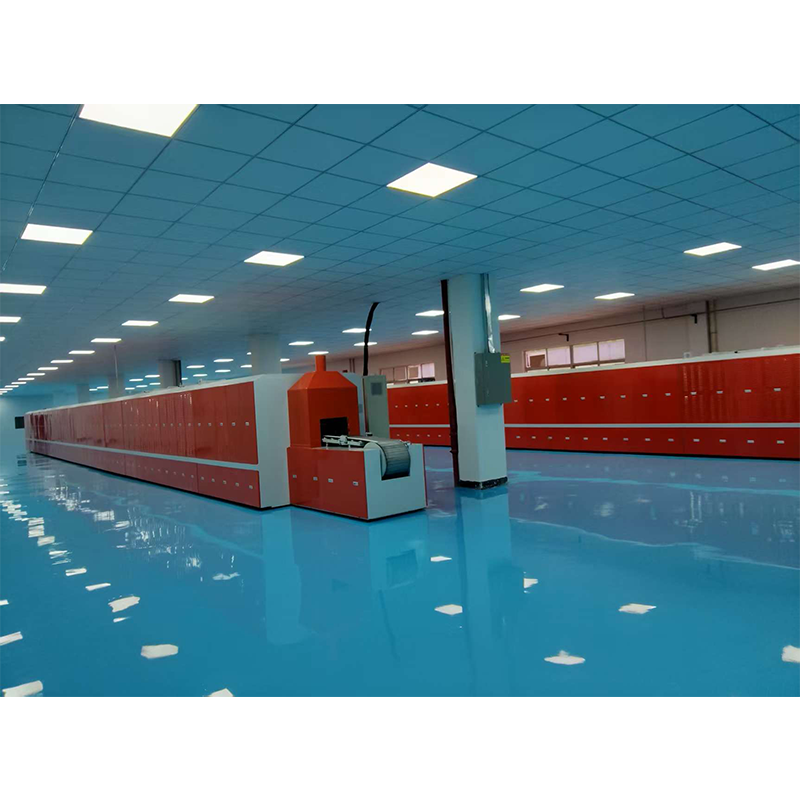


Which products require heat treatment using continuous brazing furnaces
Mar. 04, 2026
Continuous brazing furnaces are primarily used for the heat treatment of the following products:
Automotive Industry Components
Aluminum radiators, water tanks, intercoolers, and oil coolers: Brazing is completed in nitrogen or ammonia decomposition gas using continuous gas-shielded brazing furnaces, ensuring joint strength and sealing performance.
Automotive air conditioning condensers and evaporators: Aluminum brazing processes are employed to achieve efficient heat exchange performance.
Microchannel radiators and aluminum water-cooling plates: Used in new energy vehicle battery cooling systems, requiring precise temperature control and uniform heating.
Energy Equipment Components
EGR coolers (Exhaust Gas Recirculation coolers): Some utilize continuous brazing processes, suitable for the efficient production of tube-shell structures.
Battery cooling plates and charging station coolers: In the new energy sector, brazing achieves highly reliable connections for heat dissipation structures.
Aerospace Components
Radar grid antennas and waveguides: Vacuum brazing furnaces are used to complete high-precision welding in a vacuum environment, avoiding oxidation.
Blades and heat exchangers: With extremely high material performance requirements, continuous brazing ensures structural stability.
Electronic Communication Equipment
Liquid-cooling plates and air-cooling enclosures: Used for heat dissipation in electronic components, brazing achieves efficient heat conduction paths.
Microwave magnetrons: Brazing is completed in a protective atmosphere to ensure stable electrical performance.
Home Appliance Products
Stainless steel heat exchangers and oil coolers: Continuous brazing furnaces enable mass production, enhancing product durability.
Air conditioning evaporators and condensers: Aluminum or copper-based brazing materials are used to meet efficient heat exchange requirements.
Industrial Machinery Components
Tool materials (cutting tools, bearing steels): Brazing improves hardness and wear resistance, extending service life.
Tool and die steels, high-speed steels: Brazing is completed in a vacuum or protective atmosphere to prevent material performance degradation.
Other Fields
Heat exchangers for large air separation units: Used in the air separation industry, requiring high-strength brazed structures.
Ceramic heating elements and copper VC (ultra-thin liquid-cooling heat dissipation plates): Precision connections are achieved using dedicated continuous brazing furnaces.