


How to choose the conveyor mesh belt and steel belt for continuous heat treatment furnaces
Feb. 26, 2026
In continuous heat treatment furnaces, the mesh belt and steel belt are two common conveyor carriers. The selection should be based on comprehensive considerations of process requirements, material properties, cost, and maintenance. The following is a detailed comparison and selection suggestion:
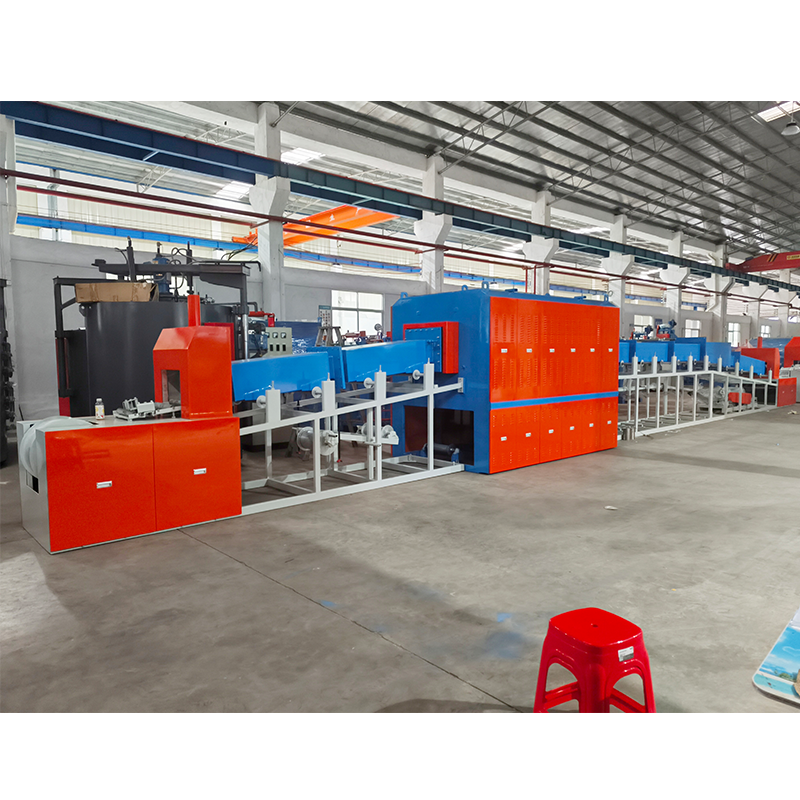
I.Mesh Belt Conveyor:
Applicable Scenarios and Advantages
1. Light Load and Small-sized Workpieces
mesh belts are usually made of stainless steel wires or high-carbon steel and have a lightweight structure, suitable for transporting lightweight and small-sized workpieces (such as thin plates, small parts, powder metallurgy products, etc.). Their breathable design can reduce air resistance during the heat treatment process and ensure temperature uniformity.
2. Oxidizing Atmosphere at High Temperature
mesh belts have a high porosity on the surface and good gas circulation, suitable for running in oxidizing atmospheres or protective atmospheres. For example, in the bright annealing of stainless steel, the mesh belt can be combined with ammonia decomposition gas to effectively prevent the workpiece from oxidizing.
3. Workpieces with Complex Shapes
The flexible structure of mesh belts can better adapt to irregular workpieces (such as gears, shafts), reducing the risk of blocking or deformation during transportation.
4. Cost and Maintenance
mesh belts have a lower initial cost, but their wear resistance is relatively poor. Long-term operation is prone to deformation or fracture due to thermal expansion or friction with the workpiece, requiring regular replacement. The maintenance cost is moderate, suitable for medium-low production lines.
II. Steel Belt Conveyor:
Applicable Scenarios and Advantages
1. Heavy Load and Large-sized Workpieces
Steel belts are made of thick steel plates and have a strong bearing capacity, suitable for transporting heavy or large workpieces. Their rigid structure can avoid sagging or deformation during transportation.
2. High Temperature and High-speed Operation
Steel belts have excellent high-temperature resistance (usually can withstand temperatures above 800°C) and a smooth surface with a low friction coefficient, suitable for high-speed continuous production.
3. High Precision Process Requirements
Steel belt operation stability is high, which can reduce vibration or deviation of workpieces during transportation, ensuring precise control of heat treatment parameters, suitable for processes requiring uniform microstructure.
4. Cost and Lifespan
Steel belts have a higher initial cost, but they have strong wear resistance and can last for several years or even longer. The long-term operation cost is low. Maintenance is simple.
III. Selection Basis and Decision Suggestions
Workpiece Characteristics
Size and Weight: Light and small workpieces choose conveyor belts, heavy workpieces choose steel belts.
Complexity of Shape: Irregular workpieces prefer conveyor belts, regular workpieces can consider steel belts.
Surface Quality Requirements: High-precision requirements (such as bright annealing of stainless steel) choose conveyor belts with protective atmospheres; ordinary surface quality can choose steel belts.
Process Parameters
Temperature Range: High-temperature processes (>800°C) choose steel belts; medium-low temperature processes (<600°C) can consider conveyor belts.
Operating Speed: High-speed production lines choose steel belts; low-speed or intermittent production can choose conveyor belts.
Atmosphere Control: Require strict airtight environment, conveyor belts with sealing structures are better; ordinary atmospheres can be met by steel belts.
Economy
Initial Investment: Conveyor belts have lower costs, steel belts have higher costs.
Long-term Operation: Steel belts have longer lifespans and lower maintenance costs, suitable for large-scale production; conveyor belts need frequent replacement, suitable for small-batch or multi-variety production.
IV. Typical Application Cases
Mesh belt Applicable Scenarios:
Continuous sintering and annealing of powder metallurgy parts.
Carburizing and quenching of small-sized gears.
Bright annealing of stainless steel wire.
Steel Belt Applicable Scenarios:
Continuous annealing production line for automotive steel plates.
Quenching and tempering of large shaft parts.
Heat treatment of high-temperature alloy plates.
V. Summary
If the workpiece is lightweight, has a complex shape, or requires low-cost startup, a mesh belt is the preferred choice; if the workpiece is heavy, operates at high temperatures and high speeds, or requires long-term stability, a steel belt is more suitable. When making the actual selection, it is recommended to combine process simulation with the supplier's experience and conduct a comprehensive cost-benefit analysis.
---------------------------------------------------------------------------------------------------
FOSHAN HUICHENGSHENG FURNACE INDUSTRY CO,.LTD
Add. No 4, Building B, No. 9 , Xingbai Road, Xiabo Third Industrial Zone, Luo Village, Shishan Town, Nanhai District, Foshan City, Guangdong Province, China
Tel.:+86 757-82580269
Mobile / Whatsapp / Wechat :+86 133 183 53285
Email: heattreatmentspecialist02@chengshengindustry.com
Website: www.chengshengindustry.com / www.hcsfurnace.com


