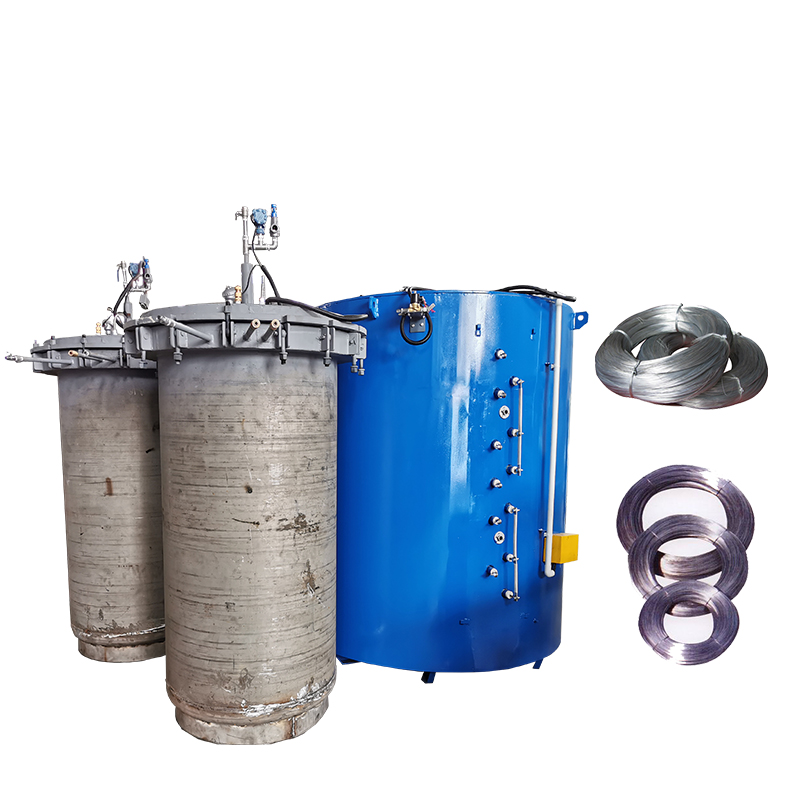


What heat treatment is required for CK67
Dec. 15, 2025
As CK67 is a high-carbon carbon spring steel, its core properties (such as high strength, high elasticity, and wear resistance) need to be achieved through the heat treatment process of quenching + tempering. The specific process and functions are as follows:
1. Quenching (core strengthening step)
Temperature range: 815~845℃ (oil quenching temperature), heat the steel to this range and hold it for a while to allow carbon to fully dissolve in the ferrite, forming a uniform austenite structure.
Cooling method: Oil quenching or water quenching oil cooling (for large-section parts), rapid cooling transforms the austenite into martensite structure, significantly enhancing hardness and strength.
Key function: Through the martensite transformation, the steel is "hardened", laying the foundation for the subsequent tempering to adjust the toughness.
2. Tempering (toughness balance step)
Temperature range: 300~500℃, choose low-temperature or high-temperature tempering according to the application scenario:
Low-temperature tempering (300℃): retain high hardness (such as for tool steel), but with lower toughness.
High-temperature tempering (500℃): enhance toughness, preventing brittle fracture (such as for springs that need to withstand dynamic loads).
Key function: Eliminate quenching stress, adjust the balance between hardness and toughness, and avoid cracking due to excessive internal stress in the material.
Process selection basis
Spring manufacturing: Prefer quenching + tempering to ensure high strength (1230~1770 MPa) and anti-buckling performance (anti-relaxation).
Large-section parts: Use water quenching oil cooling or normalizing treatment to avoid quenching cracks (as the quenching penetration is limited, oil quenching is only applicable for parts with a thickness of ≤ 20mm).
Surface strengthening: High-frequency quenching (surface hardness 52 HRC) or nitriding treatment (≥600 HV), further enhancing wear resistance.
Summary
The heat treatment of CK67 is centered on quenching and tempering. Through martensitic transformation and stress relief, it achieves a balance between strength and toughness. Surface treatment (such as nitriding) is applied to enhance wear resistance for specific scenarios. This combination of processes makes CK67 an ideal material for manufacturing springs, elastic components, and high-load mechanical parts.