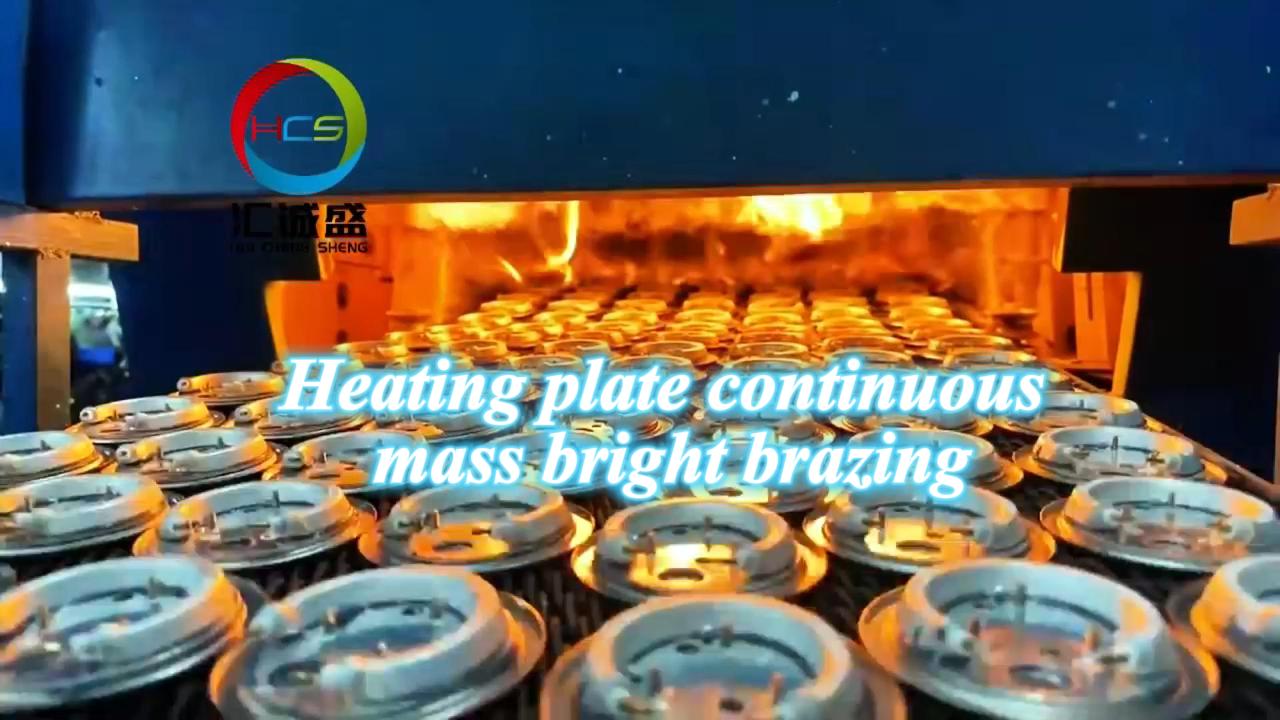


Why is brazing so important in the manufacturing of heating plates
Feb. 25, 2026
Brazing is crucial in the manufacturing of heating plates due to its material compatibility, precise connection capability, heat influence control, and production efficiency advantages. The key points are as follows:
Efficient connection of dissimilar materials
Heating plates often need to combine metals (such as copper and aluminum) with non-metals (ceramics) or different metals. Traditional fusion welding is prone to material damage due to differences in melting points. Brazing achieves connections using a filler metal (such as silver-based or aluminum-based) with a melting point lower than the base material. There is no need to melt the base material. For example, the active brazing of ceramic heating elements with metal electrodes ensures both thermal conductivity and insulation, breaking the limitation of material compatibility.
Precise structure and micro-gap filling
Heating plates need to distribute heat evenly. The capillary effect of brazing can precisely fill micro gaps of 0.01-0.1mm, eliminating contact thermal resistance. For example, in fin-type heat sinks, the brazing filler fills the gaps between aluminum fins and pipes, ensuring a continuous heat conduction path and improving heating efficiency.
Low heat input and deformation control
Brazing has a heating temperature lower than the melting point of the base material (such as soft brazing < 450°C), with small thermal stress and deformation reduced by more than 80% compared to fusion welding. This is crucial for high-precision heating plates (such as semiconductor heating platforms), maintaining flatness and assembly accuracy, and extending service life.
High efficiency and automation compatibility
High-frequency induction brazing, laser brazing, etc. can achieve local rapid heating, with heating speed increased by 3-5 times, and are easy to integrate with automated production lines, reducing human errors and improving yield (such as the yield of circuit board soldering reaching over 99.9%). This meets the requirements of large-scale production.
In summary, brazing, with its material compatibility, precision, low deformation, and high efficiency, has become an indispensable key process in the manufacturing of heating plates.