


Why use vacuum furnaces for heat treatment
Feb. 25, 2026
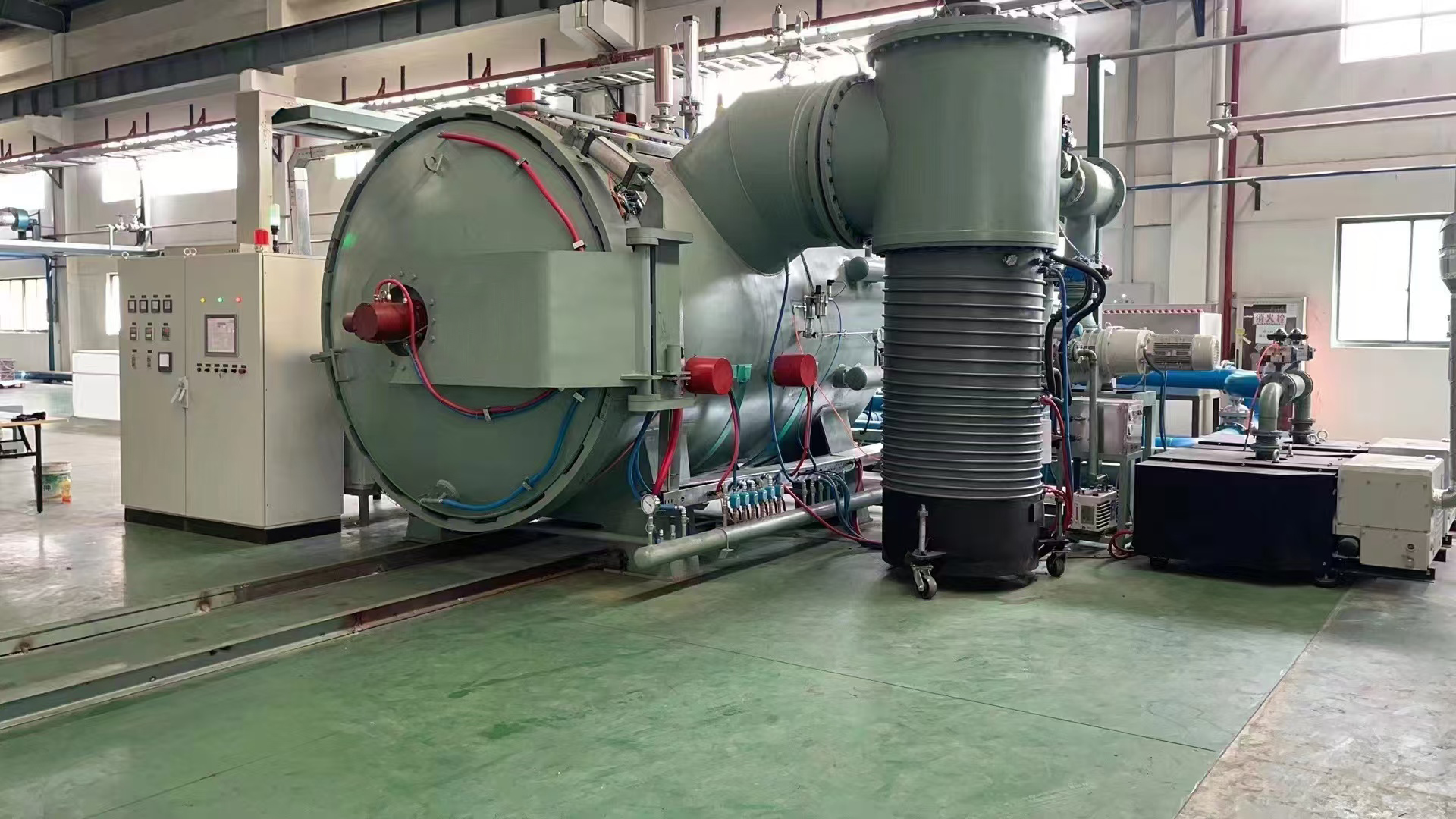
The main reason for using vacuum furnaces in heat treatment is that they can effectively solve problems such as oxidation, decarburization, and deformation in traditional heat treatment processes by creating a vacuum environment. At the same time, they can improve material properties and meet special process requirements. Here is a detailed analysis:
1.Preventing Oxidation and Decarburization
Principle: At high temperatures, the metal surface reacts with oxygen to form an oxide layer or decarburization layer (such as CO₂), resulting in a decrease in material surface hardness, an increase in brittleness, and even waste products. A vacuum environment (typically below 10⁻² Pa) can significantly reduce the oxygen content and inhibit the oxidation reaction.
Effect:
Surface quality: The surface of the processed workpiece is smooth and clean, eliminating the need for subsequent acid washing or grinding, thereby reducing material loss.
Performance stability: The oxide layer hinders the uniform heat conduction. The vacuum environment ensures consistent heat treatment results.
Special materials: For materials prone to oxidation such as titanium alloys and beryllium bronze, vacuum treatment is the only feasible solution.
2. Reduction of degassing and purification
Principle: The vacuum environment lowers the gas partial pressure, facilitating the diffusion of gases (such as hydrogen and nitrogen) within the material to the surface and their removal, avoiding internal pores or cracks.
Effect:
- Metallurgical quality: Eliminate internal pores in the material and increase density (such as in powder metallurgy products).
- Mechanical properties: Reduce internal defects and enhance fatigue strength and toughness.
- Special processes: For processes like vacuum brazing, it is necessary to remove air to prevent oxidation and ensure the quality of the weld seam.
3. Control deformation and cracking
Principle: The vacuum environment reduces the pressure of gases on the material, minimizing deformation caused by thermal stress (such as thin-walled parts or complex-shaped workpieces).
Effect:
- Dimensional accuracy: The deformation of the workpiece is only 1/5 to 1/10 of that of the air furnace, making it suitable for precision parts (such as aircraft blades, molds).
- Residual stress: Vacuum quenching can reduce quenching cracks and enhance the fatigue resistance of the workpiece.
4. Achieving special heat treatment processes
Principle: The vacuum environment can precisely control the atmosphere components (such as methane or ammonia being added during carburizing or nitriding), achieving an active atmosphere without oxidation or decarburization.
Effect:
- Surface hardening: Vacuum carburizing forms a high-hardness compound layer on the surface of the workpiece, enhancing its wear resistance.
- Cleaning treatment: Vacuum annealing can remove oil stains and residual stresses, improving the surface condition of the material.
- Composite treatment: For example, vacuum carbon-nitrogen co-plating (VCN), it simultaneously enhances the surface hardness and the toughness of the core.
5. Energy-saving and environmental protection advantages
Principle: The vacuum furnace has good sealing performance, less heat loss, and does not require a protective atmosphere (such as nitrogen or argon), thereby reducing energy consumption.
Effect:
- Energy efficiency: The heat treatment cycle is shortened, and energy consumption is reduced by 30% to 50%.
- Environmental friendliness: There is no exhaust gas emission, and it complies with the requirements of green manufacturing.
6. Applicable materials and process range
Materials: High alloy steel, tool steel, mold steel, high-speed steel, titanium alloy, beryllium bronze, magnetic materials, etc.
Processes: Vacuum annealing, vacuum quenching, vacuum tempering, vacuum brazing, vacuum sintering, vacuum thermal chemical treatment (such as carburizing, nitriding), etc.
7. Comparison with other heat treatment methods
Salt bath furnace: Low cost but residual salt bath on the surface after treatment, requires cleaning, and is prone to oxidation.
Air furnace: The atmosphere is difficult to control, prone to decarburization, and has large deformation.
Vacuum furnace: The overall performance is the best, but the equipment cost is high, suitable for high-value-added products.
Typical application scenarios
Aerospace: Turbine blades, engine parts require high strength and corrosion resistance.
Automotive industry: Gears, bearings, molds require high wear resistance and dimensional accuracy.
Electronic industry: Magnetic materials, semiconductor components require oxidation-free treatment.
Medical devices: Artificial joints, surgical tools require biocompatibility and surface cleanliness.


